How to Choose the Right Rehabilitation Training Courses for Your Needs?
Choosing the right Rehabilitation Training Courses can significantly impact your recovery journey. With various options available, it is crucial to identify what fits your unique needs and goals. Not all courses are created equal, and understanding the nuances can be overwhelming.
Consider your specific condition and how these courses align with your rehabilitation goals. Some programs focus on physical exercises, while others delve into mental health aspects or coping strategies. Look for courses led by qualified professionals with proven expertise in the field. Credentials matter, and courses backed by reputable institutions can enhance your trust in their effectiveness.
Reflect on your progress and be open to adjusting your choices as needed. Engaging in Rehabilitation Training Courses is a personal journey, and what's effective for one individual may not be ideal for another. Embrace this exploration, and ensure that the path you choose fosters not only recovery but also personal growth.

Identifying Your Rehabilitation Needs and Goals
Identifying your rehabilitation needs and goals is essential in choosing the right training course. Begin by assessing your current physical condition. Are you recovering from an injury, surgery, or a chronic condition? According to the World Health Organization, over 15% of the global population experiences some form of disability, emphasizing the importance of tailored rehabilitation programs that address individual needs.
Setting specific goals will help clarify your objectives. Use the SMART criteria—specific, measurable, achievable, relevant, and time-bound. For example, if your aim is to improve strength after a knee injury, focus on exercises that target the affected area without aggravating your condition. Research indicates that patients with clear goals show a 30% higher success rate in rehabilitation.
Tips: Keep a journal to track your progress. This can boost accountability and motivation. Additionally, consider seeking advice from professionals, such as physical therapists, who can guide you in your decision-making process. Remember, it's crucial to adjust your goals and training as you progress. Be open to change; flexibility can lead to better outcomes.
Understanding Different Types of Rehabilitation Training Programs
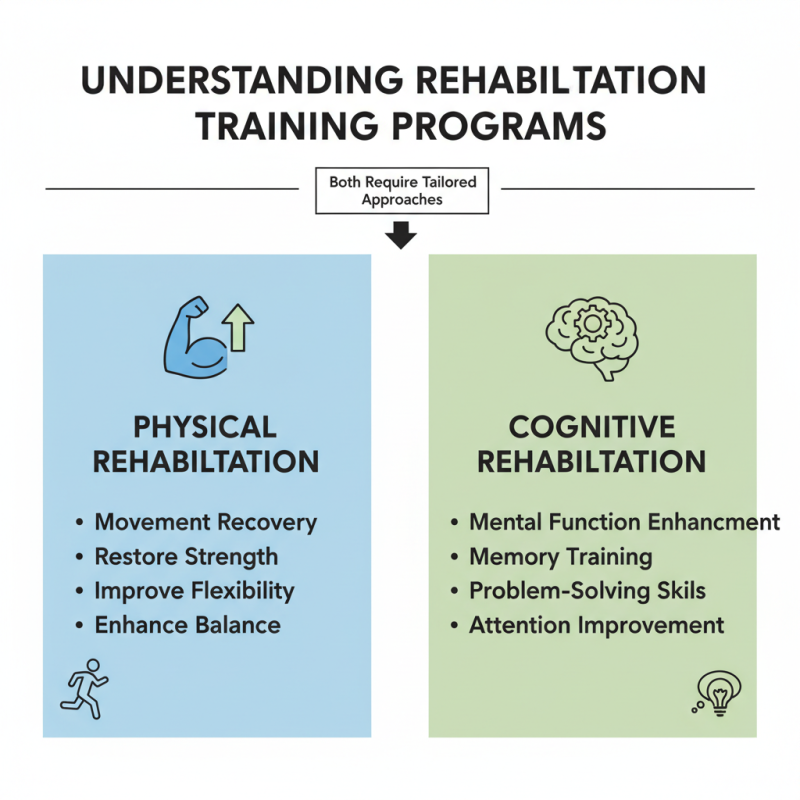
When considering rehabilitation training programs, it's essential to understand the variety available. These programs can differ widely in focus and methodology. For example, physical rehabilitation programs prioritize movement recovery. They aim to restore strength, flexibility, and balance. Cognitive rehabilitation, on the other hand, seeks to enhance mental function after injury or illness. Both require tailored approaches.
Each type of rehabilitation training program addresses specific needs. Many people find themselves overwhelmed by the options. Occupational therapy focuses on daily living skills. Art or music therapy can provide emotional support. It’s important to reflect on your personal goals. What skills do you want to regain or develop? This reflection can guide you to the right choice.
Finding the right program may involve trial and error. You may not connect with the first option you try. Keep exploring until you find a fit. Support from professionals during this process can be invaluable. Their expertise helps ensure you make informed choices that suit your rehabilitation journey.
Evaluating Course Credentials and Instructor Expertise
When selecting rehabilitation training courses, assessing course credentials and instructor expertise is vital. Research shows that over 80% of learners prioritize qualifications and experience. They often seek instructors with relevant certifications and extensive backgrounds in the field. Look for programs accredited by recognized organizations. Credentials provide assurance of quality training.
Instructor expertise matters significantly. A qualified instructor enhances the learning experience. Studies reveal that classes led by experienced trainers yield better completion rates. Instructors should have practical experience in rehabilitation, not just theoretical knowledge. They can offer insights from real-world scenarios, which enriches discussions.
Trustworthiness is essential when evaluating courses. Check for reviews from past participants. Testimonials often reflect the quality and effectiveness of the training. Be cautious of testimonials that seem overly positive. They might not present a full picture. Research multiple sources for a well-rounded view. Engaging with professionals in the field can also provide valuable insights. Real experiences often highlight aspects you may overlook.
Comparison of Rehabilitation Training Courses by Key Factors
Considering Location and Flexibility of Training Options
When selecting rehabilitation training courses, location and flexibility are crucial factors. Studies indicate that 76% of participants prefer programs tailored to their geographical area. This preference often enhances commitment and lowers dropout rates. For instance, regional access to facilities allows participants to balance their recovery with daily responsibilities, such as work or family obligations.
Flexibility is equally important. A report from the National Institute on Drug Abuse shows that programs offering a combination of in-person and online sessions yield better outcomes. This hybrid model allows individuals to adjust their schedules, fostering a sense of autonomy. Many people face challenges when committing to a rigid class structure. In such cases, short-term courses or modular training options can be beneficial. They provide opportunities for participants to reflect on their progress and adapt accordingly.
Additionally, the environment of the training location affects the rehabilitation experience. A supportive community setting can significantly motivate participants. However, not all facilities provide the same level of comfort or amenities. Evaluating the atmosphere and resources available can impact one’s engagement with the program. Thus, prospective trainees should engage in thorough research before committing to ensure that both location and flexibility align with their personal needs and circumstances.
Assessing Costs and Financial Support for Rehabilitation Courses
Choosing the right rehabilitation training courses requires careful consideration of costs and available financial support. Many programs vary in price, depending on their duration and content. It's essential to conduct thorough research on what each program offers and how it fits your budget.
Financial support can make a significant difference. Look into scholarships, grants, and loans specifically designed for rehabilitation courses. Some institutions may also offer payment plans to ease the burden of upfront costs. Investigate local resources, as community organizations often provide assistance or funding for those in need.
Tips: Always compare costs between different courses. Don’t hesitate to reach out to program coordinators for clarification on fees. Explore options like online courses, which can sometimes be more affordable. Be aware that hidden costs may arise, such as textbooks or materials. It's vital to reflect on your financial situation and develop a realistic budget before enrolling. Doing so ensures you choose a course that aids your recovery without causing financial strain.