How to Use Stem Cell Therapy for Disease Treatment and Recovery?
Stem-Cell Disease Therapy is gaining traction as a promising approach in medical treatment. With the global stem cell market projected to reach $120 billion by 2026, more patients consider it for various diseases. This rise is attributed to advancements in regenerative medicine and improved understanding of cell biology.
Evidence shows that stem cell therapies can aid in recovery from ailments such as heart disease and diabetes. For instance, clinical studies have demonstrated regeneration of damaged tissues, offering hope to many. Yet, challenges remain in standardizing treatment protocols. Not every patient achieves the desired outcomes, and ethical concerns are still under review.
Amid these developments, further research is vital. The complexity of diseases mandates tailored therapies. As we explore Stem-Cell Disease Therapy, reflecting on both successes and limitations is crucial. Balance in expectations fosters a more informed patient experience.

Overview of Stem Cell Therapy: Definition and Types
Stem cell therapy is a groundbreaking approach in modern medicine. It involves the use of stem cells to treat various diseases and promote recovery. Stem cells are unique because they can develop into different types of cells. This flexibility enables them to repair damaged tissues and regenerate cells in conditions like heart disease and diabetes.
There are primarily two types of stem cells: embryonic and adult stem cells. Embryonic stem cells come from early-stage embryos. They have the potential to become any cell type. Adult stem cells are more specialized. They exist in various tissues, like bone marrow. However, their differentiation potential is limited. According to a report by the International Society for Stem Cell Research, nearly 200 clinical trials involving stem cells are underway globally. Despite this progress, challenges remain. Ethical concerns and the complexity of stem cell applications require further exploration.
The effectiveness of stem cell therapy varies greatly. Some patients experience significant improvements, while others see minimal results. A study published in the Journal of Stem Cell Research shows that about 30% of patients undergoing such treatments face complications or unexpected outcomes. This uncertainty highlights the importance of further research and careful patient selection.
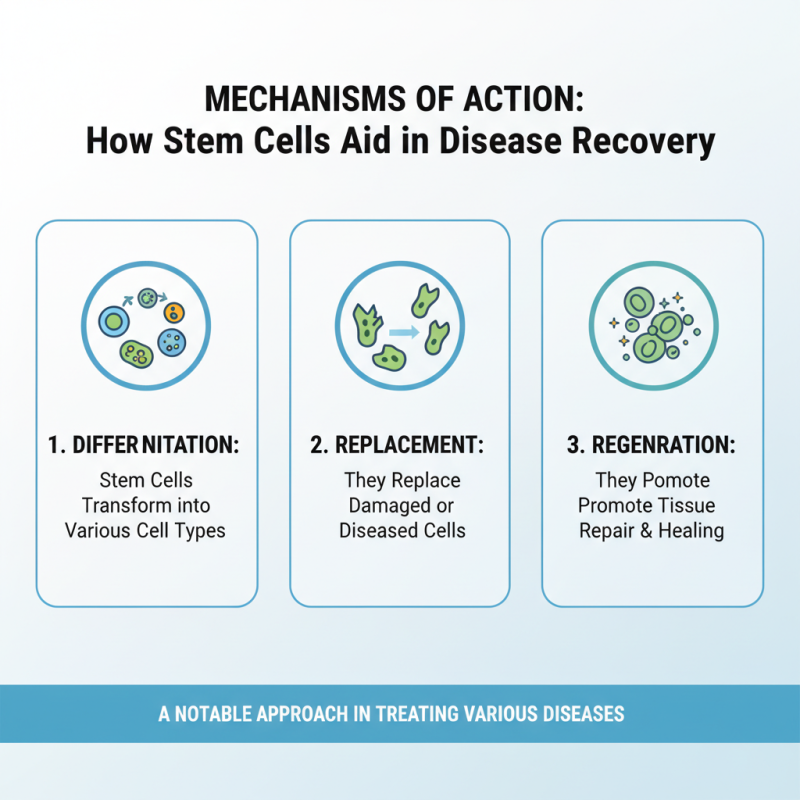
Mechanisms of Action: How Stem Cells Aid in Disease Recovery
Stem cell therapy has become a notable approach in treating various diseases. The mechanisms of action are complex yet fascinating. Stem cells possess the unique ability to differentiate into various cell types. This ability enables them to replace damaged or diseased cells in the body.
When an injury occurs, stem cells move to the affected site. They release signaling molecules that help in inflammation control. This process is crucial for healing. Moreover, stem cells can contribute to tissue regeneration. They can form new blood vessels, helping to restore blood flow to damaged areas. However, the effectiveness of stem cell therapy still requires further exploration. Researchers are looking into optimal conditions and timing for treatment.
Despite promising results, not every patient experiences the same benefits. Individual responses to therapy can vary greatly. Some may find significant relief, while others see minimal changes. This inconsistency challenges researchers to deepen their understanding. Overall, understanding the mechanisms of action in stem cell therapy is essential for advancing treatments. It paves the way for broader applications in disease recovery.
Applications of Stem Cell Therapy for Specific Diseases
Stem cell therapy is gaining traction in the medical community for its potential applications in treating various diseases. Research shows that stem cells can regenerate damaged tissues, which is crucial for conditions like heart disease and diabetes. The International Society for Stem Cell Research reports that nearly 1.4 million patients may benefit from stem cell treatments annually. This indicates a growing acceptance and understanding of the therapy.
For specific diseases, stem cell therapy has shown promise in treating conditions such as multiple sclerosis and osteoarthritis. A study published in the Journal of Neuroimmunology revealed that patients with multiple sclerosis experienced substantial improvements after undergoing stem cell therapy. Furthermore, the American Academy of Orthopaedic Surgeons notes that joint health can be significantly restored through stem cell injections in osteoarthritis patients.
However, challenges remain. Successful treatment outcomes can vary widely among individuals. The uncertainty surrounding the long-term effects of stem cell therapy raises questions. Despite its potential, careful patient selection is vital. As the field evolves, continuous research and ethical considerations are paramount for sustainable advancements.
How to Use Stem Cell Therapy for Disease Treatment and Recovery? - Applications of Stem Cell Therapy for Specific Diseases
| Disease |
Stem Cell Type |
Application Method |
Clinical Outcomes |
| Multiple Sclerosis |
Mesenchymal Stem Cells |
Intravenous infusion |
Reduced neurological symptoms and improved mobility |
| Heart Disease |
Cardiac Stem Cells |
Direct injection into heart tissue |
Enhanced heart function and reduced scar tissue |
| Type 1 Diabetes |
Hematopoietic Stem Cells |
Bone marrow transplantation |
Improved insulin production and reduced autoimmune response |
| Spinal Cord Injury |
Neural Stem Cells |
Intradural transplantation |
Recovery of motor function and pain relief |
| Osteoarthritis |
Adipose-derived Stem Cells |
Intra-articular injections |
Reduced pain and improved joint function |
Procedure and Safety Considerations in Stem Cell Treatment
Stem cell therapy has gained attention for its potential in treating various diseases. However, safety considerations are paramount. Patients must understand the procedures involved. The initial step often includes a thorough evaluation. Physicians assess medical history, current health, and specific conditions. This helps determine eligibility for treatment.
During the procedure, stems cells can be sourced from various tissues, like bone marrow or fat. Harvesting these cells can cause discomfort and requires skilled hands. Patients might experience mild pain or swelling. Proper hygiene standards are crucial to minimize infection risks. It’s essential to monitor any side effects post-treatment.
Reflecting on the process reveals challenges. Results can vary widely among individuals. Some may see improvements, while others might not feel significant changes. Ongoing research is vital to enhance understanding and effectiveness. Patients should have realistic expectations and stay informed about the evolving landscape of stem cell therapy.
Future Directions: Innovations and Research in Stem Cell Therapy
Stem cell therapy is evolving rapidly. Researchers are exploring new innovations that could reshape treatment approaches. One exciting direction is using induced pluripotent stem cells (iPSCs). These cells are created from adult cells and can turn into any cell type. This opens doors for personalized medicine. There’s potential for regenerating damaged tissues and organs. Imagine a future where heart attacks could be treated by regenerating heart tissue using a patient’s own cells.
Another promising area involves gene editing techniques. Combining stem cells with CRISPR technology may enable precise corrections of genetic disorders. This could lead to breakthroughs in treating hereditary diseases and some cancers. There are still hurdles—ethical concerns and unpredictable results cause unease. The science must tread carefully, always prioritizing patient safety and ethical standards.
Clinical trials are crucial for progress. They provide essential data on efficacy and safety. Yet, many trials face challenges. Participant recruitment is often slow, and funding can be limited. Reflections on these issues show that while optimism is warranted, patience and diligence are key. The future of stem cell therapy holds promise, but it requires careful navigation of scientific and ethical landscapes.
Stem Cell Therapy Applications in Disease Treatment