



Case Stusies
Ma Muti
Gender: Male
Age: 3 years and 2 months
Admission Details:
Due to premature birth and treatment in an incubator, the child's birth weight was only 1500 grams. Within the first 27 days of life, the child experienced jaundice and anemia, subsequently receiving blood transfusions. This series of factors led to a delay in the child's development, and at around 10 months, the child still couldn't independently turn over. The final diagnosis was hydrocephalus and cerebral palsy, and since then, the child has been undergoing rehabilitation treatment. Although the upper limbs' movements are relatively normal, there is increased muscle tension and stiffness in the lower limbs, with the toes touching the ground during walking. It's noteworthy that the child's language and intellectual development are generally normal.
Admission Diagnosis: Cerebral Palsy.
Treatment Process:
After admission, we conducted detailed preoperative examinations, including the three major routine tests, liver and kidney function, and coagulation panel, all of which showed no abnormalities. Auxiliary examinations, such as chest X-rays and cardiac ultrasound, revealed no significant abnormalities, and there were no contraindications for surgery. On July 5, 2021, the patient underwent a robot-assisted brain stereotactic surgery.
Postoperative cranial CT showed no significant bleeding, indicating accurate targeting and a smooth surgical procedure. After a safe return to the ward, the patient received routine intravenous therapy, along with oxygen supplementation and cardiac monitoring. Throughout the treatment process, the patient did not experience any complications or adverse reactions.

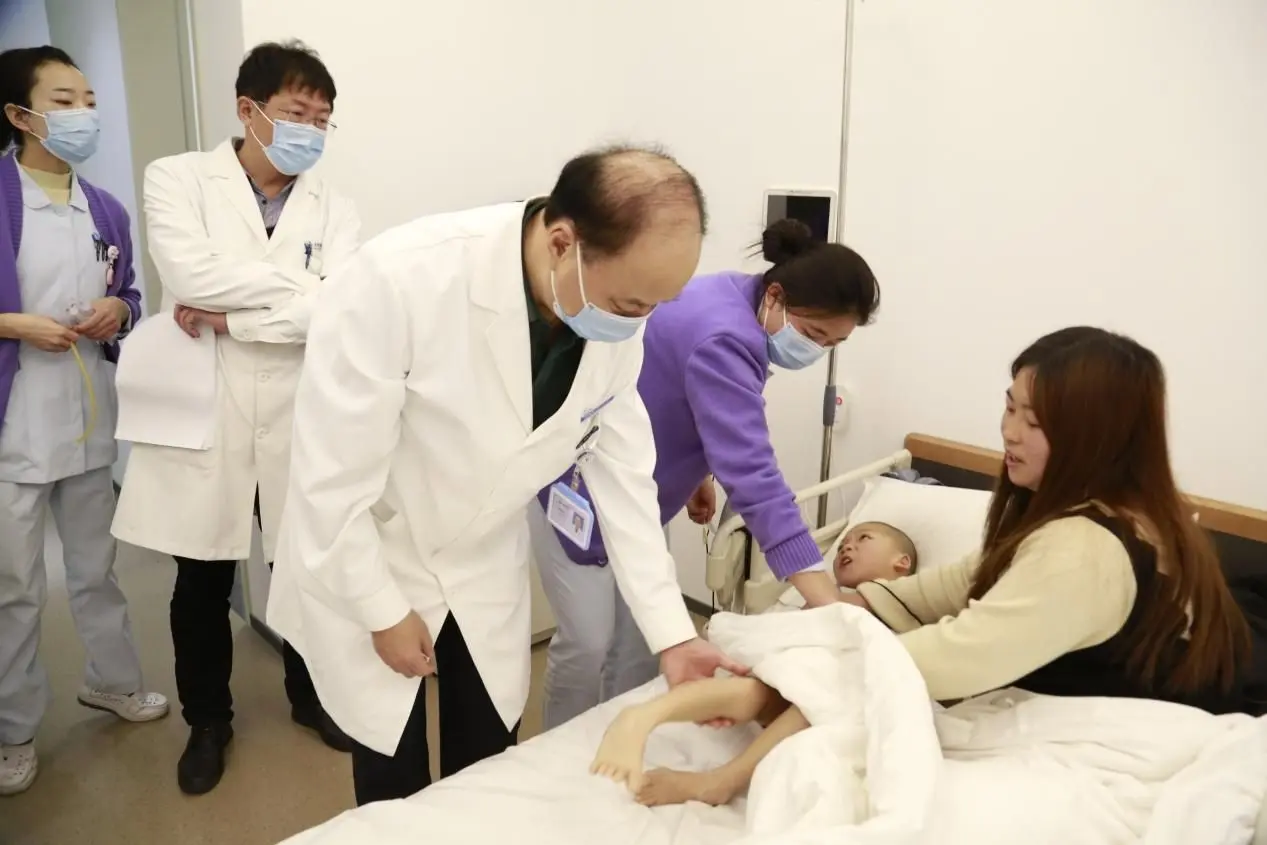
Discharge Summary:
The patient's condition remains stable, with good mental and emotional well-being. The patient is alert with clear language expression. There is a slight decrease in muscle tone in the lower limbs, and independent walking is not possible. Compared to preoperative status, there is a reduction in muscle tone in the lower limbs, improved sitting balance, and enhanced crawling ability. The surgical incision has been sutured and is healing well, with no signs of redness or swelling.
Discharge Instructions:
1.Rest and strengthen protection, avoiding vigorous head movements.
2.Resume rehabilitation training one week after discharge.
3.Seek immediate medical attention if experiencing any discomfort.